Buying rural property and working remotely in central Portugal - part II
This is the second half of the story. If you have not read it yet, part I covers buying the house, the paperwork, and our first weeks in it.
How to renovate old doors, and how not to
Do not assume we spent all our time with the ducks. We were still working full time, and still working on the house. With the furniture in place, we started thinking about bigger changes, and the first was the doors. They were old wooden doors, and replacing them would have been expensive. We were also not sure we wanted to. They worked perfectly well; they just looked old and tired. Between the doors and the garage, those were our two real projects.
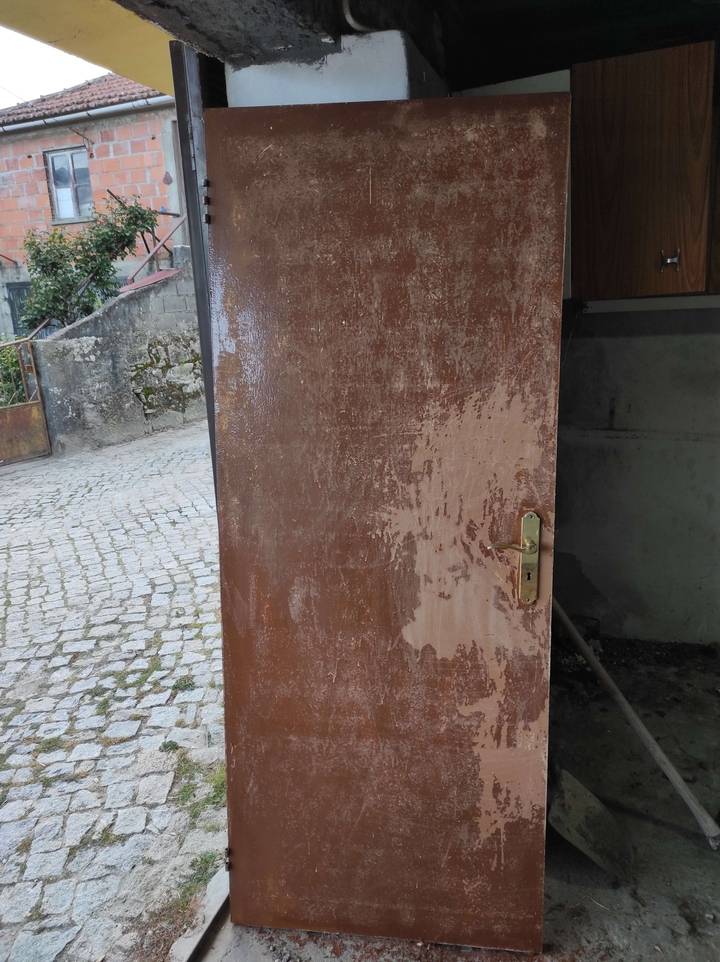
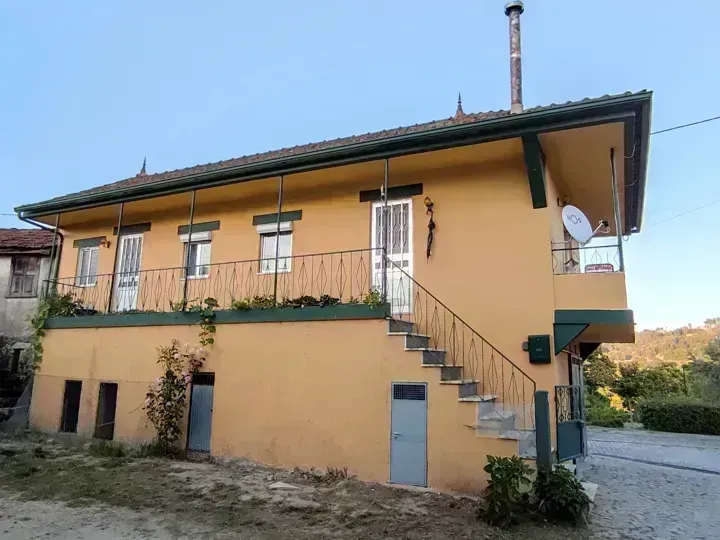
The hardest part by far was getting the old paint off. It was oily, sticky and almost immovable, and it took many evenings of hard, filthy work. Then it took some research to work out how to paint a door that has just been stripped back. After a few false starts we found the right primer and the right paint. We went with white, which contrasts well with the pale yellow of the walls and made the whole house noticeably brighter.
They did not come out perfect, and they are still old doors. But they look far better than they did, and we are more attached to them for having done the work ourselves. They also suit the house, which is nowhere near perfect and entirely functional, and beautiful enough to us.
The garage, before and after
The garage was my favourite project of the whole thing, probably because it needed the work most and because the difference is so obvious.
Step one was clearing it out. It held everything: old furniture, rotten wood, old clothes, and a great deal of dust. The furniture and the wood went into the fireplace, and once it was clean we could start on the walls.
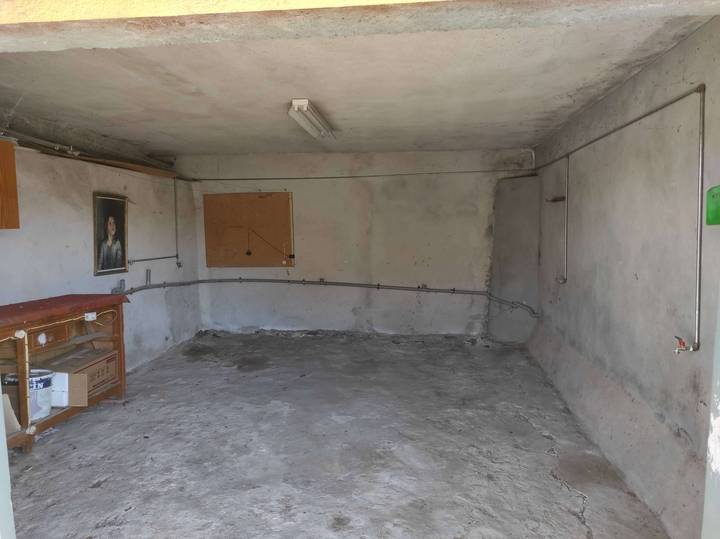
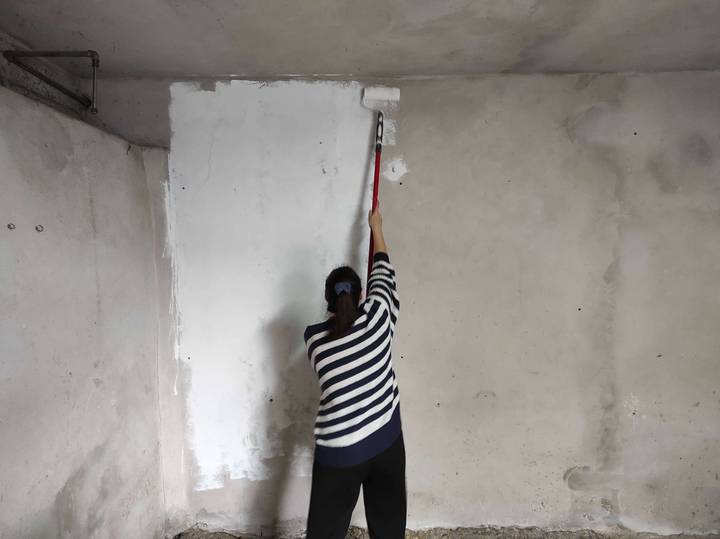
It took a lot of hands, a lot of primer and a lot of paint, and the walls came out well. Then the floor. The original concrete was cracked and uneven. The default in Portugal is to tile a garage floor, and my partner was firmly against it, because we wanted a space you could actually work in: fix a bike, fix the car, train, maybe put a pool table in. Tiles crack the moment you drop something heavy.
After some research we settled on epoxy, which seemed popular in the UK and met both of our requirements, clean to look at and genuinely hard-wearing. As a bonus it is extremely satisfying to apply. Watch one video of it going down and you will understand.
By that point we had been in Portugal four months, and it was time for me to go back to Albania to see my family and friends. My partner carried on with the garage without me, and had the pleasure of laying the epoxy-style coating himself. The result was better than either of us expected.
Making the house work for other remote workers
As the house started to look the way we had imagined, we turned to the part that had been the point all along: making it comfortable enough that other people would want to come and work from a village in central Portugal. On the drive to Porto for my flight, we stopped at IKEA one more time for the last things on the list: a dining table, a rug, curtains, shoe storage.
The one thing still bothering us was heating. The house is not well insulated, and the fireplace alone was never going to carry it through winter. With windows on every side, it can also get very hot in summer. After weighing up the options, air conditioning was the obvious answer for both problems at once.
Through contacts who work on grant applications for rural development, my partner spent our holiday in Albania putting together an application for a subsidy to install it, chasing down every document it required. It paid off. The grant came through, and shortly afterwards the house had two air conditioning units and a great deal more usable time in the year.
What it looks like a year on
Exactly one year has passed since then. We are both still doing the same jobs in Sweden, and we have travelled a good deal for work, but the project we started during the pandemic has kept going, and it is a small bright spot in a village in central Portugal. More than ten people have stayed there now, some for a weekend and some for months, and we have met people from all over because of it.
Paula, our neighbour, the same Paula from the business with the water, became a good friend not long after and now helps us look after the place and welcome guests. She does not just keep an eye on the house; she takes it as her personal responsibility that people enjoy being there. What still amazes me is how little the language barrier matters. Most of our guests speak almost no Portuguese, and our neighbours connect with them anyway, and clearly enjoy having new people around.
As the saying goes, when life gives you lemons, make lemonade. Given the lemons the pandemic handed out, I think we did fairly well.
You can see how it turned out here. Let us know what you think in the comments.

Join the conversation