Buying rural property and working remotely in central Portugal - part I
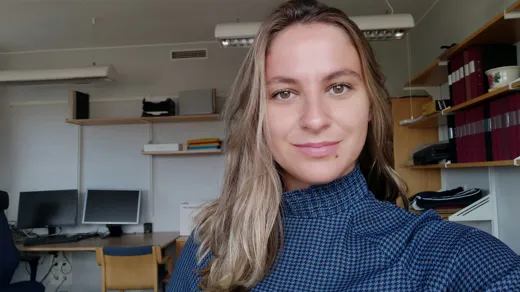
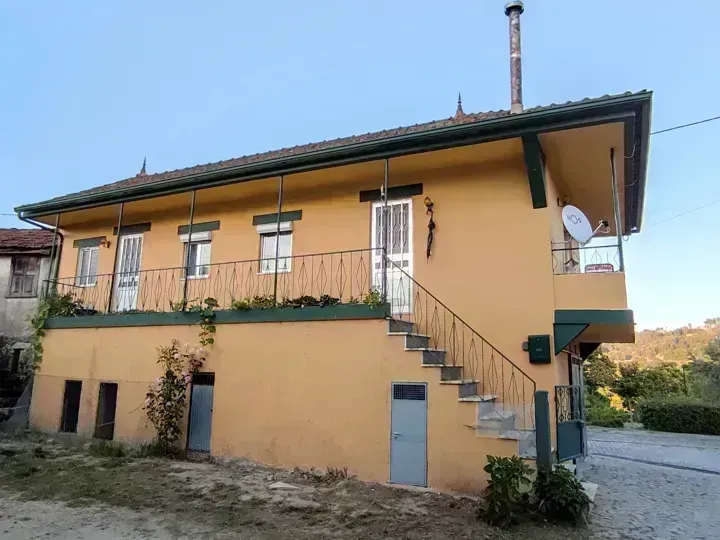
When I started my PhD in Sweden, I assumed it would be the thing I had always pictured: conferences, collaborations, travel, people. I had wanted it for as long as I can remember. A few months in, that picture fell apart very quickly.
How the pandemic changed my first year as a doctoral student
On the way back from a short skiing trip in Poland, an email arrived from the university directorate: the entire institution was moving to working from home, to slow the spread of a new virus called Covid-19. Everyone got a version of that email eventually, and everyone had the same reaction, disbelief settling into the realisation that your plans for the next several years had just been rewritten. It showed up in small things. From the day of that email, I watched the step count on my watch fall a little further each day, until one day it read 200 steps. That was the day it felt like the world had stopped altogether.
And then it occurred to me that I had been treating "different" and "worse" as the same thing, and they are not. We had been sent home to work, and in the process we had been handed the freedom to decide where home was. That was a genuinely unusual opportunity. My partner and I were both doing research in Sweden, which meant we were among the fortunate few who could work from anywhere. Complete pandemic nomads. So while one dream was slipping away, there was room for another one, which he had been circling for years: bringing life back to abandoned rural areas and putting old houses back together. Industry had pulled people out of the villages and into the cities, and the villages had emptied. With the internet, and now with Covid, there was finally a reason to reverse some of that.
How the search for a rural property in Portugal started
We had floated the idea of buying an old house to renovate several times before, and it had never gone anywhere. We looked at a few old places in the suburbs of southern Sweden and none of them felt right, probably because Sweden itself never quite felt like home. We had both come there for our PhDs and we were both from southern Europe. Sweden is a wonderful place to feel safe; our instincts still pulled towards the sun. And the sun, more often than not, means Portugal, which happens to be where my partner is from. Once we had got that far, the rest of the puzzle started falling into place.
Looking for the property we had in mind
Buying a house in Portugal as a foreigner is not a straightforward process. It takes research, filtering and patience. You start on the portals, Idealista and the rest, and that in itself is work. Swedish estate agency listings try to capture every detail that matters about a property. Portuguese listings often do not. Photos are frequently low quality, you get four shots of the same corner, and the one thing you actually want to know, such as what you can see from the windows, is missing entirely.
Patience helps, and family helps more. It was my partner's parents who did most of the digging, sifting out the places that were never going to work for what we had in mind. After a fairly thorough screening process, we found our little place, and we were genuinely excited about it.
How to buy a rural property in Portugal as a foreigner
To buy anything in Portugal, I first needed a fiscal number (número de contribuinte) from the tax office. As a foreigner, you need a Portuguese citizen and resident to vouch for your identity in order to get one. It is pure bureaucracy, but you cannot legally buy a house without it. In my case my partner's father acted as my guarantor, and the number came through shortly afterwards.
We then hired a notary's office to handle the paperwork: checking that the house carried no outstanding debts for water, electricity or taxes, paying the property transfer tax, making sure the land was included in the contract, and closing the transaction.
Once the legal side was done, the place started to feel like ours. It matched what we had wanted almost exactly: rural, but not so remote that schools, a hospital, a supermarket and restaurants were out of reach. Two bedrooms, forming part of a two-storey house, with enough room for storage, a garage, and a patch of land nearby.
Can you settle into a house in the countryside while working full time?
It needed work, but it was liveable from the start. So we kept doing our jobs in front of our computers during the day, and spent afternoons and weekends turning the place into something.
The first job was getting the water and electricity reconnected through the municipality. That took several days, which we spent trawling the internet for decent second-hand furniture. In Sweden we had furnished a whole home that way; in central Portugal the second-hand market turned out to be thin, both in quality and in price. We found a sofa bed through Facebook Marketplace and almost nothing else. So we changed tactics. Talking to people is how things actually get done in Portugal, and a conversation with the owner of a furniture repair shop produced our queen size bed, in perfect working order, at a very good price, sitting in his garage waiting for someone to want it.
A fridge, a bed, a sofa bed, a work table and a patio table were all it took to move into our first home in rural Portugal while holding down full-time jobs in Sweden. I remember clearly that the chair I had been working from at the patio table collapsed under me a few days after we moved in. No great tragedy; we had a hammer and nails. Going from 200 steps a day and a world that had stopped moving, to doing something real with my hands in the afternoons, was the whole point.
Moving in: the first days
Our first days there are funny in hindsight and were hard at the time. We ran into all the things you cannot see when you are deciding whether to buy. After a deep clean, a strong smell started coming from the corridor and we could not find the source. Then the gas installation in the kitchen, which runs both the cooking and the hot water, began to leak, which frightened me badly, because gas is everywhere in Portugal and I had never worked with it. A few days after that, the shower cabin started leaking, and the water temperature in it was almost impossible to control; it was either scalding or freezing. When the weather turned cold, we discovered the chimney sent smoke back into the house. And on top of all of it, we had unknowingly been taking water from a neighbour's private supply, which led to a slightly tense conversation with Paula next door.
So no, it did not start easily. But we were close to family, in a beautiful part of Portugal, trying to make something work on our own terms, and none of it was enough to put us off. Taking one problem at a time kept it from becoming overwhelming, and being decent about the water sorted out a relationship that had got off on the wrong foot.
If Portugal teaches you one thing, it is patience. Preferably with a galão in hand.
Old house, new solutions: the first round of fixes
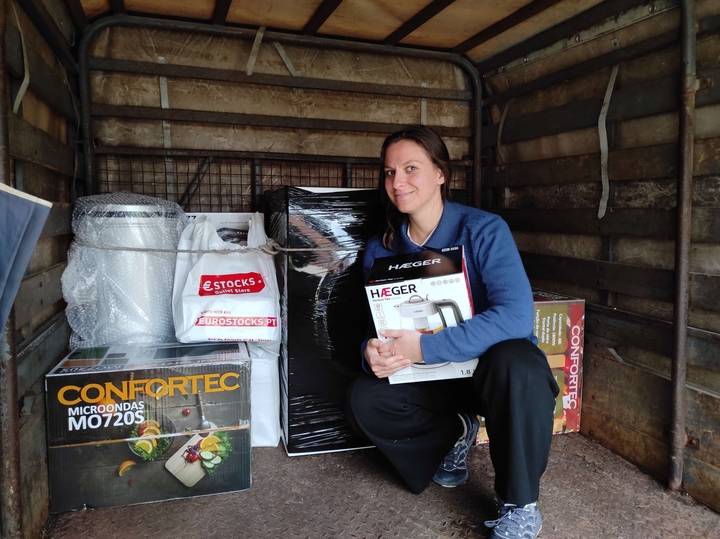
We started small. First the gas leak, which once fixed also solved the water temperature problem. Then appliances, which we needed and could not find second-hand. After some thought about how not to spend a fortune, we ended up at a shop near Porto called EuroStocks, which sells slightly damaged goods at a discount. Sounds like a good deal? We thought so too, and we bought everything we needed in one go.
The real challenge of working remotely from a rural house
You may be wondering how working from patio furniture was going. With the gas sorted, hot water available and a kettle in the kitchen, our backs made the case for proper desks. Sweden is good for at least one thing: IKEA. And IKEA is excellent for team building, since you have to assemble all of it yourself. It made our afternoons genuinely entertaining, and we learned a few things about each other along the way.
It was starting to look like an oasis. Not everything went to plan, though. Sometimes the metric system lets you down, and that is more or less what happened with the wardrobe, which turned out to be a few centimetres wider than the space we had for it. Very few things in this world are truly unfixable, and a wardrobe that is slightly too big is not one of them. What we did was move it to the other side of the room, where the radiator was, and take the radiator out instead. We had not planned that at all, and it worked out better: with the radiator gone the wardrobe fits properly, and the desk beside it now sits by the window. I will take that trade.
Starting a vegetable garden as a complete beginner
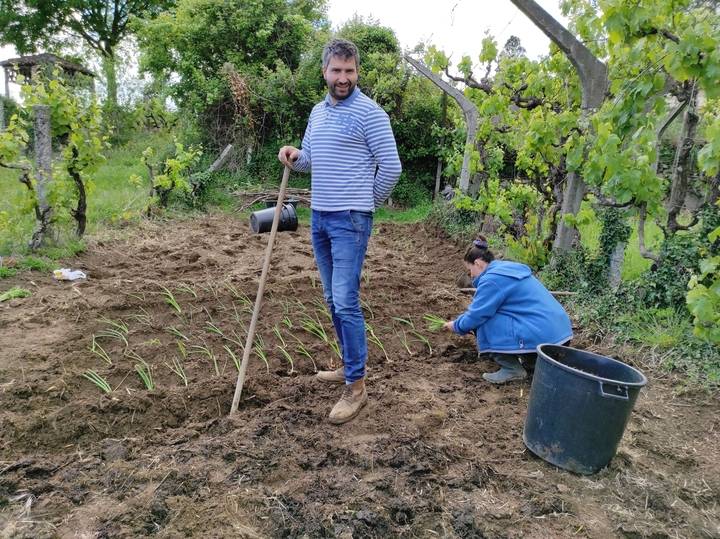
With that done, it felt like time to do something with the land, and it was the right season for planting. We went to the Monday market in the village, where people bring what they grow. A real marketplace. We walked the stalls buying whatever looked easy and quick: onions, peppers, tomatoes, lettuce.
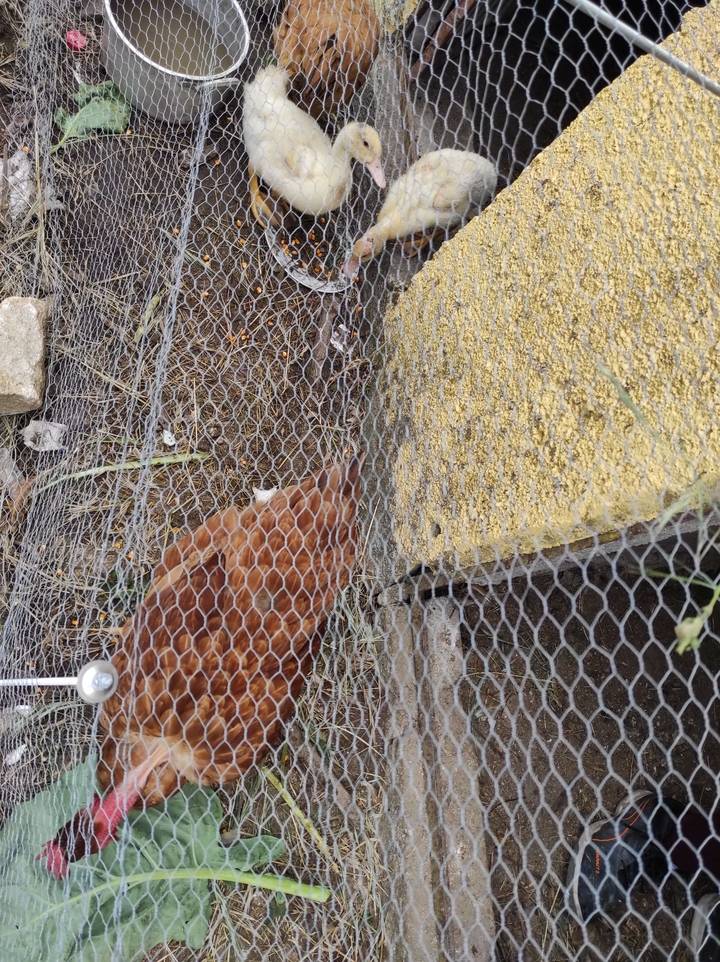
On the way out, a small chorus of cheeping stopped us, and there were the ducklings, a few days old, and about as appealing as anything gets. We had already been turning over the idea of some chickens and a small coop in the basement. Once we saw the ducklings, the decision made itself.
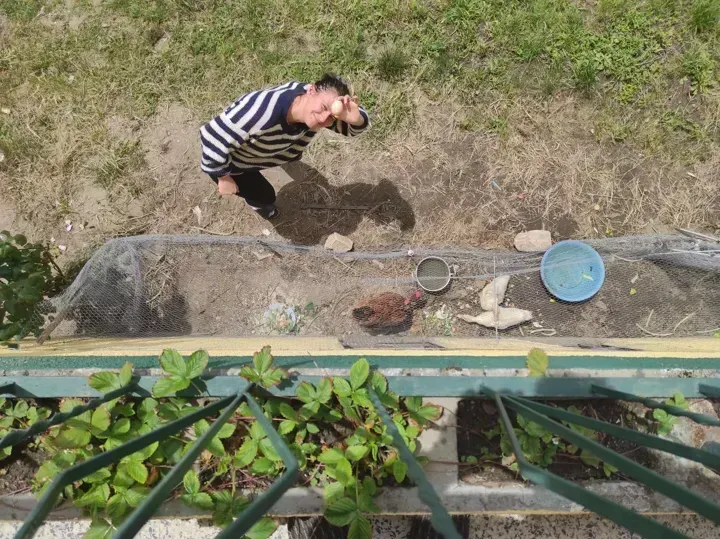
The coop had to be improvised, and it took some creativity. My partner's idea was to run netting around two small storage rooms in the basement, so the birds could sleep inside and come out through the low doors during the day. It was a small space, but big enough for two ducklings, one young hen and one fully grown one. Best of all, it sat directly below our veranda.
Can you keep chickens and ducks together?
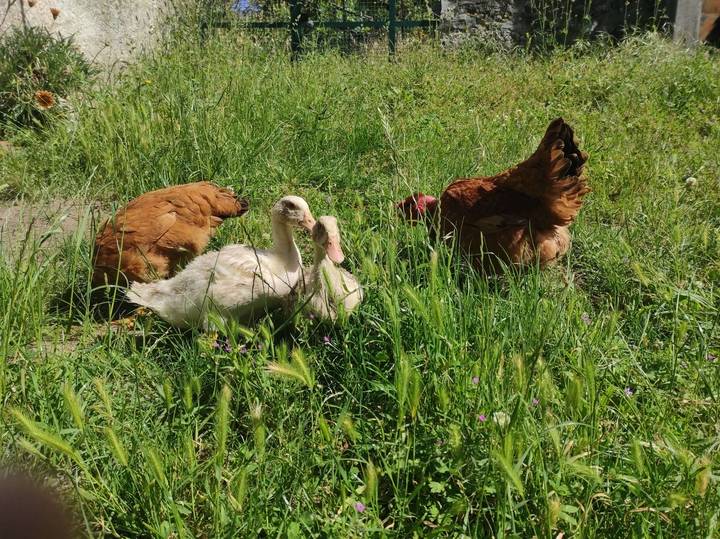
Not immediately, it turns out. At first the chickens seemed not to have worked out that the ducklings were not food, and pecked at them constantly. As the ducklings grew stronger the two sides came to an understanding, and after that they got on perfectly well.
The birds made the house feel like a home, largely because we got far too attached to them. Every morning, before I had even washed my face, I would go straight outside and they would already be waiting at the fence. They knew what was coming, and they loved the fresh water I carried up from the village fountain. And the best part: every morning there was an egg. It never stopped feeling like finding treasure. The chickens were happy, we were happy, and our food waste stopped being waste, because everything left over was received with enthusiasm. Before long the whole neighbourhood was dropping by the coop, and our afternoons went on feeding them, walking them and watching them grow.
The doors and the garage were the two big projects still ahead of us, and they are the subject of part II.

Please can you share the name and location of the shop in Porto?
Hi Bec, the name of the store and the link has now been added to the post. :)