Visit Almodôvar, Portugal: a small town in the Alentejo

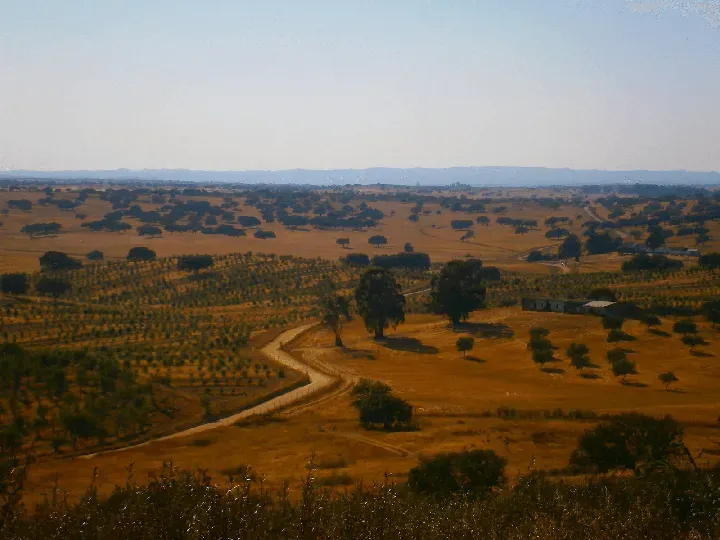
Almodôvar is a small medieval town in the Alentejo, 80 km north of Faro and its airport, which makes it an easy detour on the way to or from the Algarve (37.511762, -8.060513).
Its appeal comes from three things: the easy-going people, the particular shape of the landscape, and roots that go back a very long way. The region's wholesome food and world-class wine are simply the icing on the cake.
The people of Almodôvar
Locals will tell you, in their usual self-deprecating way, that the town has three speeds: slow, very slow, and stationary.
Alongside the humour, what tends to stay with visitors is the generosity, and the habit of speaking plainly. Expect straight, honest answers. Also expect very long directions, followed by someone walking you to your destination anyway. It is a good place to stop trying to be efficient.
The landscape
The countryside around Almodôvar is best seen from above, looking out over rolling hills that carry on as far as you can see.
The town's favourite viewpoint, and its most romantic, is the hill of Santo Amaro. From the top you look down onto lower hills, gold with summer stubble or, in spring, covered in coloured pasture. Cork trees stand across all of it, the single most recognisable thing in an Alentejo landscape.
It is also worth walking up to the Monte Clérigo dam. The road is narrow, walled in stone and lined with olive trees. You will probably find yourself slowing to the rhythm of the sheep bells, or stopping altogether while a flock crosses, and taking in the calm of a way of life that has not changed much. At the top, swim in the still water of the dam and stay a while.
The food and wine
People from the Alentejo are proud of their cooking, and it is easy to see why. Their version of the Mediterranean diet is both very good and genuinely sustainable.
The Alentejo black pig, a domesticated descendant of the Iberian wild boar, roams free and fattens itself on acorns. Both the fresh meat and the charcuterie made from it have an intense flavour and a rich, oily texture. Buy it at the town's market hall, straight from a farmer, or from an artisan delicatessen, and take your time over it.
In a restaurant, you will find the traditional local fare done properly. The dish to order is secretos, which is the name of both the cut and the dish.
To drink, choose something local. The Alentejo is home to many of Portugal's best-known vineyards and some of the finest wine in the world; look for the much-awarded Malhadinha Nova, which is intensely fruity and complex, or Herdade dos Grous. Finish with an espresso and a glass of medronho, the local firewater.
Or skip the restaurant and put together a picnic: sheep's and goat's cheese, smoked sausage from the black pig, good crusty bread from a wood-fired oven, a tomato and olive salad with plenty of olive oil, and a regional wine. That is a day sorted.
Roots and history
Between 5,000-year-old inscribed gravestones and medieval ruins, Almodôvar's past is close to the surface. Take it in slowly, wandering the narrow streets, or watching the pace of the day from one of the café terraces on the main square. Walk around the market hall, and if your timing is right, join in with the locals: the Medieval Market, the Arts and Culture Fair and the parish festivals run right through the summer.
For more of the history, start at Saint Ildefonso's church in the middle of town, built in the Middle Ages and reworked in a succession of architectural styles since. Then walk two minutes to the Southwest Writing Museum, at 31 Relógio street. Look at the Iron Age carved tombstones for traces of Phoenician or Celtic influence, and try to guess what mattered enough to be cut permanently into stone. Then consider how much the people who did the carving had in common with the people living on these same hills today.
Almodôvar also sits on the Iberian Pyrite Belt, where mining began thousands of years ago. Zinc and copper extraction is still one of the pillars of the local economy, supporting more than 500 families, keeping people in the area and drawing new residents in. A visit to the old São Domingos mine nearby, or to the modern Neves-Corvo mine, explains a good deal about the town's character.
Whenever you make it to Almodôvar, tell us how it went. We would like to hear about it.


Join the conversation