Serra do São Macário: the legend, the landscape and what to see nearby

The legend
The word São (Portuguese for saint) tells you straight away that Serra do São Macário has sacred origins. According to the legend, Macário was the son of a wealthy castellan who took refuge high in these mountains, far from anyone. He went there by choice, as penance, after killing his own father by accident during a hunt. Against every expectation he lived to a great age, and that, along with a reputed ability to carry glowing embers in his bare hands, turned him into a local legend.
The story has outlasted him. Mass is still celebrated in his honour on the last Sunday of July, and a chapel was built on the summit. When the locals could not agree on exactly where Macário had lived, a second chapel went up as well. Around a thousand people come during that last weekend of July. Some arrive on buses organised by the municipalities; plenty of others walk the whole way, either to pay their respects or simply for the pleasure of the trails.
The landscape
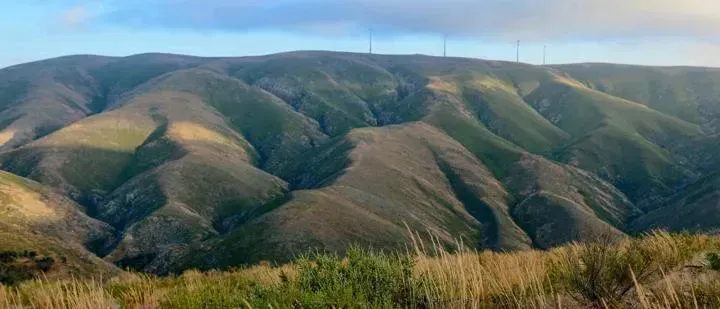
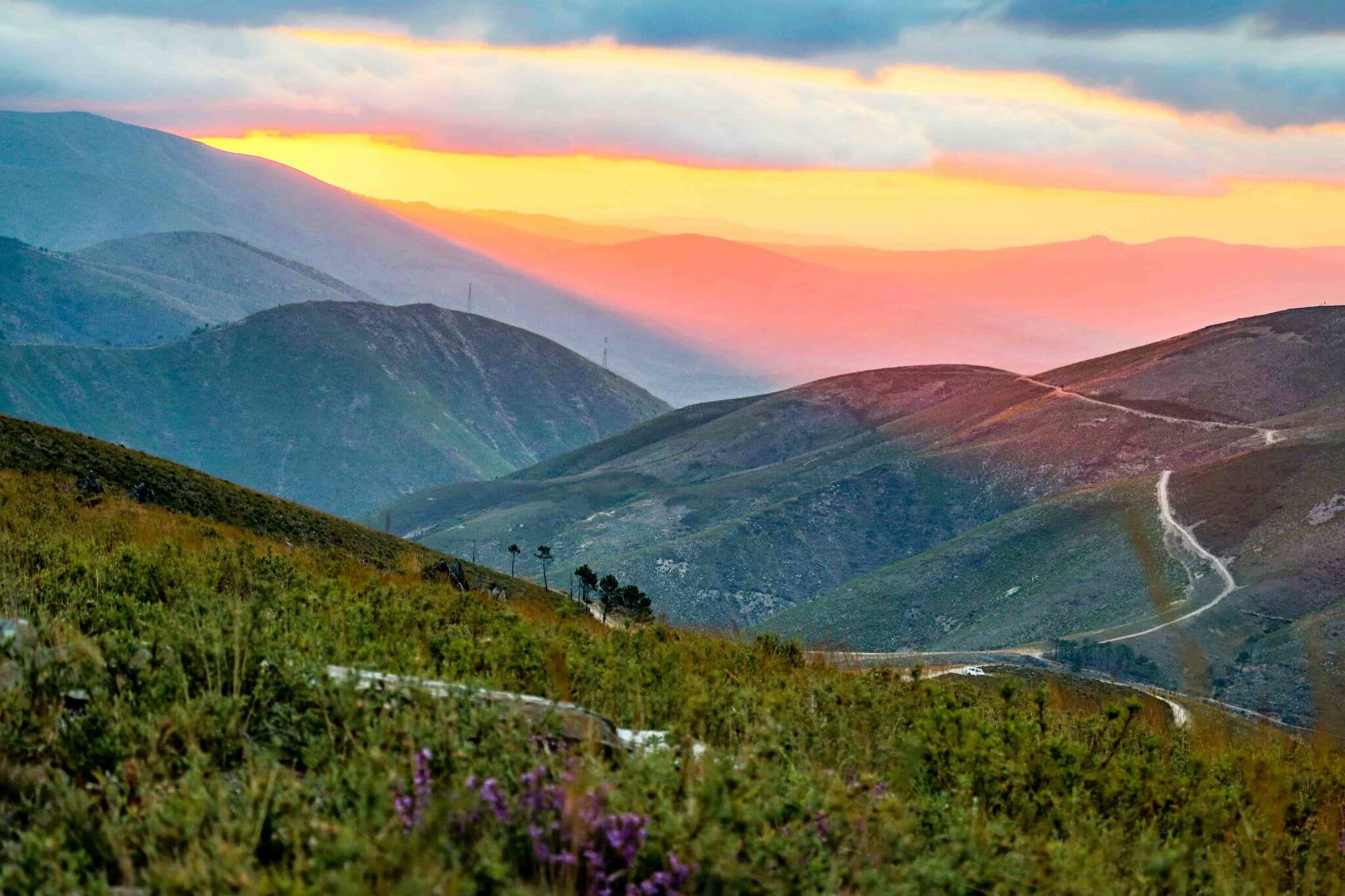
It is no accident that Portuguese uses the same word, serra, for a mountain range and for a saw. The ridges of the Serra do São Macário look exactly like teeth on a blade, and their colour shifts with the distance, the hour and the weather. Almost any day here is a good day, but the views are at their best around sunrise or sunset, under a clear sky or a few scattered clouds.
Points of interest around São Macário
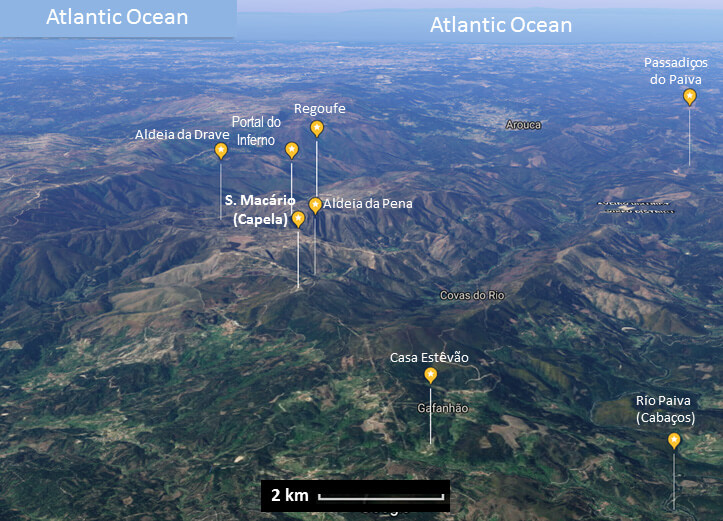
The people who live here are proud of this area, which is usually the surest sign that a place is worth seeing. Portal do Inferno, the gate of hell, is only five kilometres away along a beautiful road. In the valley to the right of that road sits a tiny village called Aldeia da Pena, the village of pity, named for the compassion people felt for anyone living so deep in a valley. It is well known across Portugal and still visited often by locals.
The road to Portal do Inferno runs along the boundary between the districts of Viseu and Aveiro. Face Portal do Inferno and the vertiginous, picturesque country in front of you belongs to Viseu. Behind you lies Aldeia da Drave, a deserted village that now serves as the national scouts' centre. A few kilometres further on is Regoufe, a village preserved almost like a museum, with disused tungsten mines that have been closed since the end of the Second World War.
Join the conversation